OUR PROGRAMS

Care for children and teens

Care for children and teenagers with eating disorders

At Melrose Center, we provide the specialized care needed to treat eating disorders in children and adolescents so they can grow into healthy, confident adults. Our team of licensed psychologists, medical experts, dietitians and other eating disorder specialists work closely with you and your child to create a personalized treatment plan based on their needs. With over 35 years of experience successfully treating eating disorders in patients of all ages, we provide the expertise your family needs through recovery and beyond.
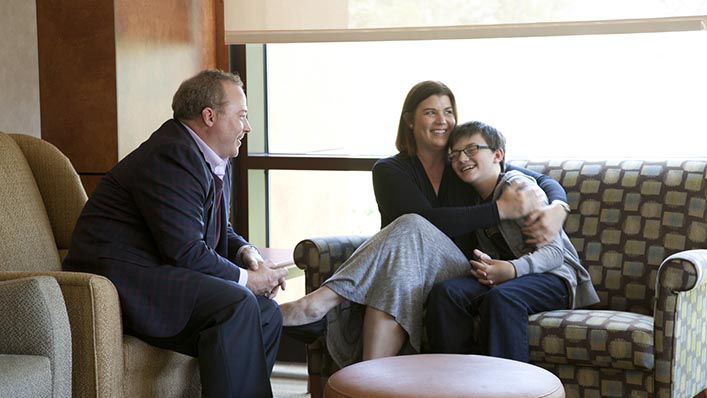
Treating children and adolescents with eating disorders

Children need different treatments for eating disorders than adults. They need the support of the entire family as they heal, gain confidence and learn new skills around food and exercise. Our goal is to keep your child at home and give them the treatment they need through outpatient care. But in some situations, we may recommend that your child stay at Melrose Center for residential treatment. Our specialized outpatient treatment options include:

Family-based treatment (FBT)

Family-based treatment, sometimes called FBT, is one of the most successful ways to treat young adults with eating disorders. In FBT, everyone in the family has a role in your child’s treatment and recovery. We might recommend family meals, family therapy sessions and other activities to help your child recover.

There are three phases of family based therapy:

  • Weight restoration – The goal of the first phase is to get your child back to a healthy weight. During this phase, the parents or guardians are in total control of every meal and snack. Many parents make meals family events so everyone can support the child during mealtime. To help meals and snacks go as smoothly as possible, you’ll get a lot of guidance from your child’s eating disorder dietitian and other members of the care team.
  • Return of control – Once your child returns to a healthy weight and actively participates in meals, you’ll slowly let them have more control over their meals and snacks.
  • Establishing independence – This is the final phase of FBT which focuses on improving your child’s relationship with food and their independence. You’ll work with doctors to establish a routine and help your child catch up to developmental milestones.

Parent and Supportive Others Group

Meetings are virtual on Tuesdays, at 6 to 7 p.m., facilitated by Linsey Utzinger, PsyD, LP

Eating disorders affect more than the person with the disease. Join this support group for adults who care for loved ones with an eating disorder – and need support and care for themselves. Cameras are required to be on for the duration of the group when joining the meeting virtually. Information about how to join a Teams meeting without an account.

Frequently asked questions (FAQs)