When you’ve torn your ACL, you realize just how much you rely on it. Instability and pain can keep you from doing the things you love – whether that includes a competitive sport, recreational exercise or the activities of daily life. If you want to move with strength and confidence again, ACL surgery may get you there.
How severe an ACL tear can be will vary, as do the treatment goals of people who experience them. We will only recommend surgery if it’s the best option for you. If it is, you’ll be in the hands of the same fellowship-trained sports medicine orthopedic surgeons who treat many of Minnesota’s professional athletes.
Our surgeons perform ACL surgeries as outpatient procedures and are experts in using the most minimally invasive techniques, so you can go home the same day and recover as quickly as possible. And after surgery for an ACL tear, our physical therapists and other sports medicine specialists will create a personalized rehabilitation plan to help you return to your desired level of activity.
Fully torn ACLs cannot heal themselves, so ACL tears often need surgical treatment to repair or replace the ligament.
The anterior cruciate ligament stabilizes your knee joint by aligning your thigh bone with your shin bone. Other ligaments and nearby muscles also help with stabilization, which is why many people can still walk after tearing their ACL.
However, if you’re walking with a torn ACL, you’ll likely notice changes in how confident and comfortable you feel. Without a strong ligament keeping the joint aligned, you may also experience moments where your knee moves in ways it isn’t meant to, resulting in instability and pain. Over time, repeated episodes of instability can damage the cartilage in your knee. Surgery is often needed to restore the knee’s stability, strength and range of motion after an ACL tear.
The only way to know if ACL surgery is the right treatment for you is to talk with an orthopedic surgeon who specializes in helping people return to active lifestyles. If your knee joint remains relatively stable and you aren’t trying to return to a highly active lifestyle, you may be satisfied with nonsurgical treatments. However, surgery is often recommended if:
- You’re experiencing frequent instability, pain and stiffness that keeps you from doing the things you love.
- You engage in intense labor, competitive or recreational sports that involve pivoting, or other physical activity.
Our surgeons will assess your situation and guide you to the best possible treatment for you, whether that’s surgical or nonsurgical.
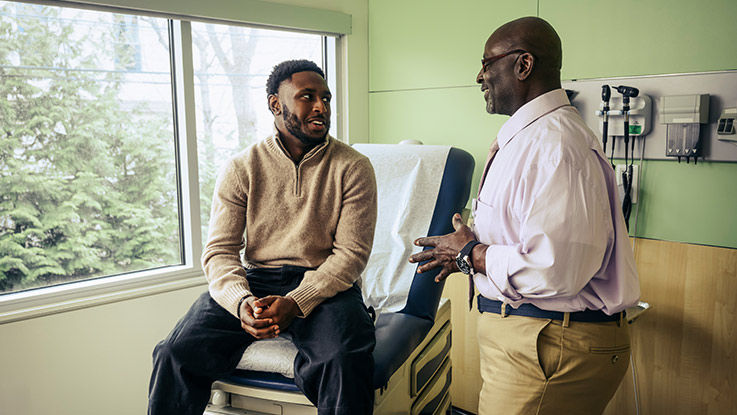
There are several types of surgery we use to treat ACL tears, and they’re all outpatient procedures – meaning you can go home the same day. Which surgery will work best for you depends on a number of factors, including the severity of the tear and whether other ligaments have been damaged.
ACL reconstruction is the most common type of ACL surgery for both full and partial tears. While a partially torn ACL can sometimes be surgically repaired, it’s often more effective to replace the ACL entirely.
In a reconstruction, the damaged ACL tissue is removed and replaced with a graft from your patellar tendon, hamstring, quadriceps or a donor. ACL reconstruction surgery is typically a minimally invasive procedure.
It generally takes about a year to recover to your pre-injury activity level after surgery, but you’ll start to feel better and return to light activities, like a desk job and driving, long before then. Most patients walk with the help of crutches and a leg brace immediately after surgery and can walk unassisted after 4-6 weeks. It typically takes around 3-4 months to return to jogging, 6-7 months to get back to light sports like golf, and about a year to return to high-intensity sports like soccer and basketball.
Your personal ACL surgery recovery timeline will depend on which kind you have, as well as factors like your age, the severity of your injury and your recovery goals. Your surgeon will talk with you about how long you can expect recovery to take.
In most cases, rehabilitation is recommended after ACL tear surgery. Rehabilitation can help you have a smoother recovery and lower your risk of future injuries. We’ll work with you to create a personalized rehabilitation plan that may include a combination of physical therapy, specialized return to sport programs and other treatments.
Movement is key to a successful recovery after ACL surgery. You’ll likely begin physical therapy within a week of having surgery.
The main pillars of physical therapy after ACL surgery are exercise, education and manual therapy, but your rehabilitation program may also include complementary therapies like blood flow restriction and electric nerve stimulation. The physical therapists you’ll work with at TRIA are experts in knee rehabilitation and sports medicine, so they’re the best people to help you get back to an active lifestyle.
Typically, the first few weeks of physical therapy focus on reducing swelling and pain while improving the range of motion in your knee and activating the surrounding muscles. From there, you’ll continue to build up strength and mobility, working your way back to bearing your full body weight as you perform normal activities. This process generally lasts around six months. If you’re an athlete, we may also recommend a specialized physical therapy program such as TRIA L.E.A.P.®
Schedule a surgery consultation
Meet our expert orthopedic surgeons
Yes, there are nonsurgical alternatives to ACL tear surgery. Physical therapy is generally the first-line treatment for an ACL tear. However, whether it can be a standalone treatment or prehab for surgery depends on the extent of your injury and your personal activity goals.
You may not need surgery if your other knee ligaments aren’t damaged, you don’t have instability symptoms and you aren’t trying to return to a high level of activity. Remember, the only way to know if surgery is needed to treat your torn ACL is to talk with an orthopedic surgeon. We’ll guide you to the best treatment for your injury, whether it’s a nonsurgical treatment or surgery.
Preparing for ACL surgery can help your recovery go more smoothly. There are a few easy steps you can take to get ready.
- Follow your care team’s instructions. In most cases, we’ll recommend exercises to do before your ACL surgery. These exercises help strengthen the muscles around your knee joint, which can make it easier to rebuild strength and mobility after your surgery.
- Prepare your home. You won’t be as mobile during your recovery. Clearing paths, setting up accessible support and putting necessary items where it’s easy to reach them will help make your recovery safer and easier.
- Ask your loved ones for help. You’ll need to take a break from your usual activities after surgery. Reach out to friends, family, neighbors or coworkers for help with errands, driving, pet care and anything else that might be difficult during recovery.
- Arrange a ride home from surgery. If you need help getting a ride, our team will help you find a way to get home safely.
You’ll need help while you recover from ACL surgery. Your ability to use your knee will be limited, making it difficult for you to drive, do chores, and care for yourself or others in your household. Having someone help care for you during the first few weeks after surgery is a key part of your recovery.
Patients often tell us they aren’t sure who to ask for help after their surgery. Any capable adult can lend a hand during your recovery. We recommend asking your neighbors, coworkers, family members or friends.
When you can resume different activities depends on many factors. You may be able to return to a desk job and drive your car after a few weeks with your doctor’s clearance.
If you go to all of your physical therapy appointments and follow your recovery plan at home, you’ll likely be able to return to unassisted walking around 4-6 weeks after surgery, some exercise after 3-4 months, and light sports after 6-7 months. Most people recover to their pre-injury activity level, including high-level sports, around a year after surgery.
We accept most health insurance plans, including Blue Cross and Blue Shield of Minnesota, Cigna, HealthPartners, Medica and many others. To learn how your plan covers the services you need, call the number on the back of your insurance card. Here are member services numbers to help you get started:
- Blue Cross and Blue Shield of Minnesota: 800-382-2000
- Cigna: 800-244-6224
- HealthPartners: 800-883-2177
- Medica: 800-952-3455
- Medicare: 1-800-MEDICARE (1-800-633-4227)
- UnitedHealthcare: 877-842-3210