TMJ physical therapy

Relieve jaw pain and restore function with TMJ physical therapy
When your jaw is healthy, it’s easy to forget how often you use it throughout the day. But jaw pain or stiffness can make everything from eating to talking uncomfortable. If you’re struggling with painful symptoms in or around your jaw or neck, temporomandibular joint (TMJ) physical therapy can help.
TMJ physical therapy uses exercises, manual therapy and education to improve jaw function and manage pain. In most cases, it’s the best course of treatment for jaw issues, and physical therapy is shown to resolve uncomfortable jaw symptoms without the need for invasive treatments, such as injections or surgery. With TRIA physical therapy locations in Minnesota and western Wisconsin, you can find care for TMJ where it’s most convenient for you. Take the first step toward feeling better by making an appointment with one of our TMJ physical therapists.
What is TMJ physical therapy?
The temporomandibular joints connect your jaw to your head. Sometimes, the joints or surrounding tissues can become painful, stiff or inflamed. This group of symptoms and conditions is called temporomandibular disorders (TMD).
TMJ physical therapy uses exercises, stretches, manual therapy and education to treat jaw and neck issues. Relaxing the muscles and ligaments around the joint can relieve uncomfortable TMD symptoms and improve jaw function.
Who can benefit from TMJ physical therapy
TMJ physical therapists provide effective treatments for a range of jaw issues with 85% of patients reporting that it helped them feel better. If jaw pain, jaw stiffness, neck pain or difficulty opening your mouth is making it hard for you to enjoy your daily life, or if you suspect your headaches are related to your jaw pain, it may be time to seek physical therapy. It can also help you recover from chronic jaw issues and symptoms that don’t improve with home remedies.
In many cases, TMJ issues can cause symptoms in the ears. If you notice a sensation of ear fullness or ear pain that doesn’t improve, TMJ physical therapy may be a good fit. We’ll assess your condition and start you on treatment if we determine a neck or jaw issue is causing your symptoms. We’ll also connect you with an audiologist or ear, nose and throat (ENT) doctor if other specialty care is needed.
Make an appointment with one of our TMJ physical therapists to talk about your symptoms, your recovery goals and how this treatment can help you feel better.
Types of TMJ conditions we treat with physical therapy
We treat a wide range of temporomandibular disorders with physical therapy, including:
- Arthritis of the jaw
- Chronic jaw clenching or grinding (bruxism)
- Earaches, ear fullness or ringing in ears (
tinnitus ) - Headache that won’t go away
- Jaw injuries
- Jaw myofascial pain
- Jaw myofascial spasms
- Jaw pain
- Lockjaw (trismus)
- Pain when you chew or talk
- TMJ disc displacement
What to expect during a TMJ physical therapy appointment
Our physical therapists will assess your condition and create a personalized treatment plan based on your specific symptoms and goals for recovery. In most cases, you’ll begin with 1-2 sessions a week.
Common therapy techniques we use during TMJ physical therapy appointments include:
- Jaw exercises – Depending on your condition, our physical therapists may guide you through exercises that target the muscles in your jaw. Common exercises include sliding your jaw from side to side, opening or closing your mouth against resistance and tongue lifts.
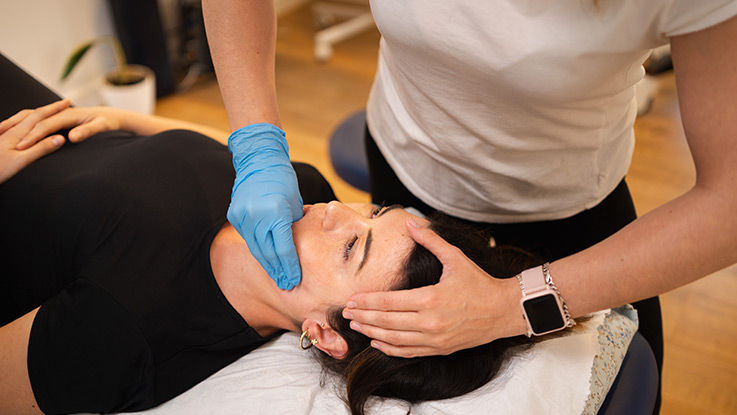
- Jaw massage – Massaging the muscles around the jaw can help reduce stiffness, promote blood flow and improve range of motion.
- Joint mobilization – This is a type of manual therapy where we’ll move the joint to improve its range of motion and reduce stiffness. Joint mobilization stretches the joint capsule (the connective tissues that surround the joint) and ligaments to encourage regular function.
- TMJ posture exercises – Sustained posture can strain the muscles in your head and neck, causing them to work harder and creating tension in and around your jaw. Exercises such as chin tucks, shoulder rotations and back extensions can all help improve your posture and loosen the muscles in your upper body.
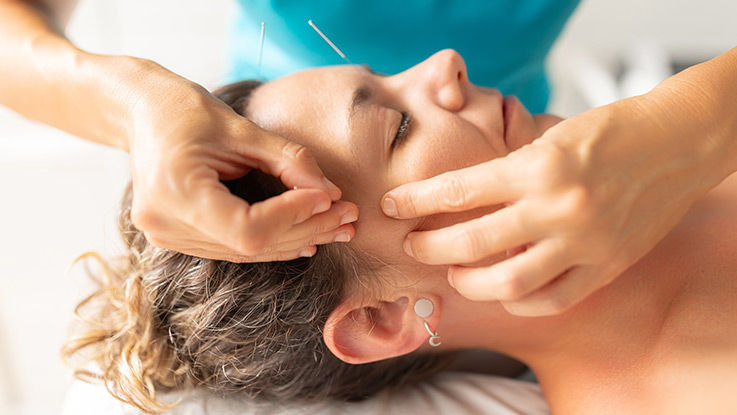
- Dry needling – During
dry needling , physical therapists will strategically place needles around the jaw to reduce muscle tension, improve muscle activation and reduce pain. This treatment also encourages the brain to release endorphins, which helps relieve pain. - Education about lifestyle modifications – There are many lifestyle modifications that can help reduce uncomfortable TMD symptoms. Our physical therapists will teach you relaxation techniques, show you how to modify movements and work with you to quit habits that might be aggravating your neck or jaw pain.
Benefits of TMJ physical therapy
Depending on your symptoms and lifestyle, you’ll develop specific recovery goals with your physical therapist. Each person will experience slightly different benefits of TMJ physical therapy. Some common benefits include:
- Decreased headaches
- Easier chewing
- Improved jaw function and mobility
- Less pain
- Restful sleep