Eating disorders don't always look the same from person to person. Some people experience significant challenges with eating, exercise, body image or weight concerns, but their symptoms don't meet the exact criteria for eating disorders, such as anorexia, bulimia and binge eating disorder. In these cases, patients may be diagnosed with a condition known as other specified feeding or eating disorder (OSFED).
A person with OSFED may restrict food intake without being underweight, engage in binge eating episodes less frequently than required for another diagnosis, or use other unhealthy behaviors that don't fit neatly into a specific eating disorder category.
OSFED is not a “less serious” eating disorder. In fact, it's the most common eating disorder diagnosis among adolescents and adults. It can affect anyone and is not isolated to any specific age range or gender. Its impact on emotional, physical and mental health can be just as severe as with other eating disorder diagnoses, and treatment is often needed to support lasting recovery.
At Melrose Center, you'll receive personalized care from a team of eating disorder specialists. Licensed psychologists, psychiatrists, physicians and registered dietitians work together to create a treatment plan that supports OSFED recovery and helps you build a healthier relationship with food, your body and yourself.
“I am so grateful that I went to treatment, even though I was so resistant and so afraid. I would not be the person I am today without it. I would not be able to be a mom. I wouldn't be able to be a nurse. And I have found so many passions that I didn't know I really had because I was so focused on the eating disorder.”
Getting an accurate diagnosis is an important first step toward recovery. At Melrose Center, the process begins with a comprehensive assessment. During this appointment, an eating disorder specialist will talk with you or your loved one about eating habits, thoughts and behaviors related to food and body image, and any symptoms or concerns you may be experiencing.
We may also recommend a physical exam or other testing to better understand how eating disorder behaviors may be affecting your overall health. This can help identify concerns, such as weight changes, growth delays or nutritional deficiencies.
If you or a loved one is diagnosed with OSFED or another eating disorder, you'll meet with one of our care managers. They'll explain your treatment recommendations, answer your questions and help schedule the next steps in your care so you can start working toward recovery.
Recovery looks different for everyone. That's why your team of eating disorder specialists will work closely with you to create an OSFED treatment plan personalized to your unique needs, symptoms and goals.
Melrose Center offers a full continuum of eating disorder treatment programs, including outpatient treatment, intensive outpatient programs (IOP), partial hospitalization programs (PHP), residential treatment and intensive residential treatment.
Recovery from an eating disorder isn't always a straight line. It's common for people to move between different levels of care as their needs change over time. No matter where you are in your recovery journey, our team is here to provide the support and treatment you need.
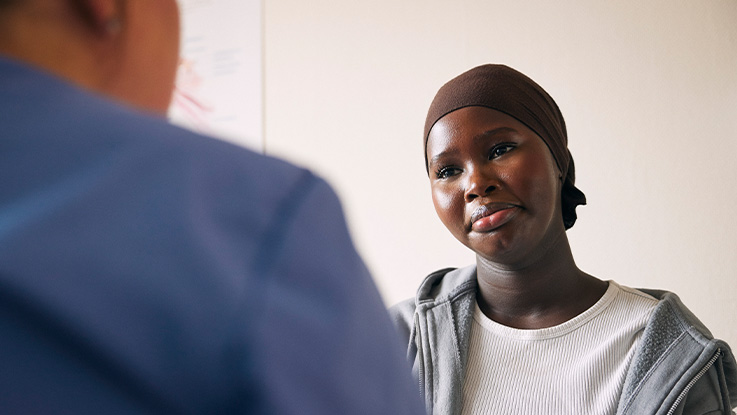
Nearly everyone diagnosed with OSFED begins their recovery in outpatient treatment. With this level of care, you'll continue living at home while meeting regularly with members of your treatment team, which may include an eating disorder therapist, dietitian, medical expert and psychiatrist.
The number and type of appointments will depend on what you or your child need, and may change as you move through recovery. In most cases, you'll have choice of in-person or virtual appointments for eating disorders, or a combination of both.
For people who need more support throughout the day, Melrose Center offers residential treatment in a structured, healing environment.
During residential treatment for eating disorders, you'll stay at our St. Louis Park location with a daily schedule that may include individual therapy, nutrition counseling, group programming, guided meals, family therapy and other therapeutic activities.
Residential treatment is often recommended for individuals whose symptoms require more support than outpatient care can provide and who would benefit from focusing fully on recovery.
People with OSFED may experience symptoms similar to anorexia nervosa, bulimia nervosa or binge eating disorder, but those symptoms may look different or occur less frequently. As a result, the signs can be easy to miss.
If you're concerned about yourself or a loved one, watch for changes in eating habits, weight, physical health or emotional well-being. Signs of OSFED may include:
- Significant weight loss or weight gain
- Negative thoughts about body weight, shape or size
- Changes in eating habits, such as skipping meals, avoiding certain foods, binge eating or developing rigid food rules
- Purging behaviors, including self-induced vomiting, excessive exercise or misuse of laxatives
- Withdrawing from friends, family or social activities
- Physical symptoms such as dizziness, fatigue, thinning hair or other signs of poor nutrition
- Atypical anorexia nervosa –Significant food restriction and weight loss without meeting the low-weight criteria for anorexia nervosa.
- Bulimia nervosa of low frequency and/or limited duration –Binge eating and purging behaviors that occur less often than required for a bulimia diagnosis.
- Binge eating disorder of low frequency and/or limited duration – Binge eating episodes that don't occur frequently enough for a binge eating disorder diagnosis.
- Purging disorder – Purging behaviors, such as vomiting or excessive exercise, without binge eating.
- Night eating syndrome – Repeated episodes of eating during the night, often accompanied by difficulty controlling the behavior.
Yes. The OFSED diagnosis was previously known as eating disorder not otherwise specified (EDNOS) but was redefined in 2013 by the American Psychiatric Association
If you think someone you love has an eating disorder, the best thing to do is talk to them about it. We know that bringing up something as sensitive as an eating disorder might make you uncomfortable. You might not know how to start the conversation or what to say once you do bring it up.
Try using these tips as a starting point to guide your conversation:
- Look into eating disorders before the conversation and have resources available when you talk to your loved one.
- Find a moment where you can have the conversation one-on-one to keep your loved one from feeling pressured or outnumbered.
- Try not to be vague. Mention specific behaviors that concern you.
- Listen without judgment and speak calmly.
- Suggest they speak to a doctor to find out if they do need professional support. Call Melrose Center at 952-993-4100 to schedule an initial assessment.
If you’re unsure how to start the conversation, learn more about talking about eating disorders (PDF).
If you’re an existing patient, you can call Melrose Center at 952-993-6200 to make an appointment. We’ll help you make an appointment at the location of your choosing.
If you’re not sure if you or someone you love has OSFED, your first step is to schedule an initial assessment. During an initial assessment, you’ll talk to one of our licensed psychologists, psychiatrists and/or a primary care clinician about your concerns, symptoms and questions. If you or your child are diagnosed with OSFED or another eating disorder during the assessment, one of our care managers will help you schedule your next appointments. Call 952-993-4100 to schedule an initial assessment.
Most insurance companies have plans that cover some or all of the costs for eating disorder recovery, such as outpatient care, a partial hospitalization program (PHP) and residential care. However, insurance plans differ on the types and amount of care they cover. These differences may relate to the specific diagnosis, the level of care and whether a provider is in-network. To make it easier to get the information you need, we have insurance benefit verification forms that include questions you can ask your insurance provider.
We accept most health insurance plans, including Blue Cross and Blue Shield of Minnesota, Cigna, HealthPartners, Medica and many others. To learn how your plan covers the services you need, call the number on the back of your insurance card. Here are member services numbers to help you get started:
- Blue Cross and Blue Shield of Minnesota: 800-382-2000
- Cigna: 800-244-6224
- HealthPartners: 800-883-2177
- Medica: 800-952-3455
- Medicare: 1-800-MEDICARE (1-800-633-4227)
- UnitedHealthcare: 877-842-3210