Finding time for eating disorder treatment can feel overwhelming, especially when you're trying to balance work, school and other daily responsibilities. Virtual care through video visits can help you get expert care from eating disorder specialists in a way that fits your life.
Depending on your needs and preferences, virtual care may be part of an eating disorder treatment plan for adults, adolescents and children.
If you or a loved one may need help for an eating disorder, schedule an assessment.
If you or your loved one is a current patient, schedule with a member of your care team.
Eating disorders are complex mental health conditions, and recovery looks different for everyone. From the moment you or your loved one begins treatment with Melrose Center, you'll have a team of eating disorder specialists working with you to create a personalized care plan that supports recovery.
Depending on your needs and preferences, care may be provided virtually, in person at one of the Melrose Center locations, or through a combination of both. Our team will help you receive the right level of support in a way that works for you.
Here's how virtual care could be part of your eating disorder treatment program:
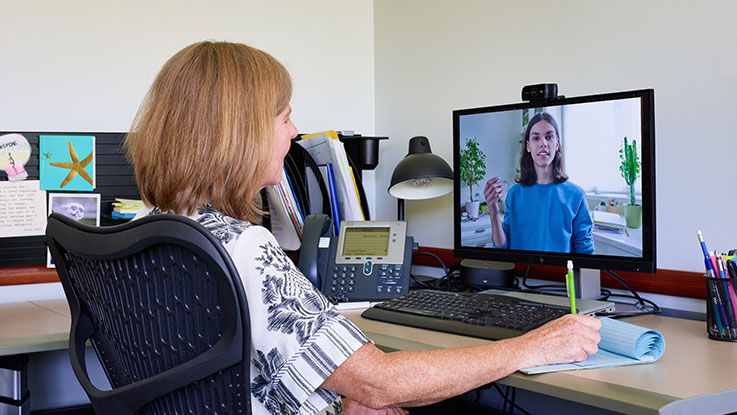
If you think that you or a loved one may have symptoms of an eating disorder, the first step is an initial assessment. During this appointment, an eating disorder specialist will review symptoms, discuss concerns, and determine the type of care and support that may be most helpful.
Video visits are usually an option for initial assessments. But if symptoms are severe or there are concerns about a person’s medical stability, we may recommend an in-person assessment. This helps ensure that you or your child receive the appropriate level of care to safely support recovery.
Outpatient treatment involves one-on-one appointments with members of your treatment team while you continue to live at home. Most people begin eating disorder treatment with outpatient care, while others transition to outpatient treatment later in their recovery journey.
Video visits can be a great option for outpatient appointments with eating disorder therapists, dietitians, psychiatrists and occupational therapists. However, you’ll still need an in-person visit if a physical exam or lab test is necessary.
Video appointments can be a convenient way for families to learn how to support a loved one recovering from an eating disorder.
Family-based treatment (FBT) is a core part of how we care for children and teens with eating disorders. With FBT, parents and caregivers play a leading role in helping their child change eating behaviors, restore weight, and return to healthy growth and development.
You’ll meet with your child’s eating disorder therapist and dietitian to learn practical strategies that can help your family feel more supported and confident during eating and throughout recovery. In most cases, you’ll be able to choose between video visits or in-person appointments, depending on your family's needs and preferences.
At Melrose Center, adults with binge eating disorder may be able to participate in virtual group treatment led by eating disorder specialists.
Many adults begin with our 16-week Binge Eating Disorder Group Program, which meets once a week for two hours. New groups start throughout the year, allowing participants to begin treatment without a long wait.
We also offer a Binge Eating Disorder Recovery Group, which meets regularly throughout the year to provide ongoing support in recovery.
Supporting someone with an eating disorder can be rewarding, challenging and emotional. Melrose Center offers a free, weekly virtual support group for adults who care for a loved one with an eating disorder. The group meets every Tuesday from 6 to 7 p.m. You don’t need to register to join the meeting.
Virtual care options, including video visits, may be part of a personalized treatment plan for many different eating disorders. Your care team will work with you to determine the approach that best supports your needs, symptoms and recovery goals.
Eating disorders we treat include:
- Anorexia nervosa – Restricting food intake because of an intense fear of gaining weight, or concerns about body shape or size.
- Avoidant/restrictive food intake disorder (ARFID) – Severely limiting the types or amount of food you eat, often because of sensory sensitivities, fear of choking or vomiting, or a lack of interest in eating.
- Binge eating disorder – Episodes of eating large amounts of food in a short period of time, often followed by feelings of guilt, shame or distress.
- Bulimia nervosa – Cycles of binge eating followed by behaviors intended to compensate, such as vomiting, excessive exercise, misuse of laxatives or diuretics, or food restriction.
- Other specified feeding and eating disorder (OSFED) – An eating disorder diagnosis used when symptoms cause significant distress, but do not fully match the criteria for another eating disorder.

At Melrose Center, you or your loved one will get the care and guidance you need at every stage of recovery.
Virtual care can be an important part of eating disorder treatment, whether you're just getting started or continuing your recovery journey. Our team will work with you to determine the right combination of virtual and in-person care based on your needs.
If a higher level of care is recommended, we're here to help with that too. We offer a full continuum of eating disorder treatment programs, including intensive outpatient, partial hospitalization and residential treatment.
With five convenient locations across the Twin Cities metro area, expert eating disorder care is never far from home.
If you or a loved one may need help for an eating disorder, schedule an assessment.
If you or your loved one is a current patient, schedule with a member of your care team.
At Melrose Center, we've found that virtual care can be just as effective as in-person care for many people. That's because you'll receive personalized support from your eating disorder recovery team no matter how you receive care.
Our therapists, dietitians, occupational therapists and psychiatrists use the same evidence-based treatment approaches during virtual appointments as they do during in-person visits, so you’ll get expert care wherever you are.
Online care can be an option for all types of eating disorders. However, virtual care may not be the best fit depending on the severity of symptoms.
People with severe medical complications, significant weight instability, serious electrolyte abnormalities or other severe symptoms may need a higher level of support, such as intensive outpatient, partial hospitalization, residential or intensive residential treatment.
Virtual care for eating disorders is an option for new and existing patients of any age or gender. Your eating disorder care team will work with you to determine if virtual care makes sense as part of a personalized treatment plan for you or your loved one.
It will depend on your care needs and preferences. Some people may be able to get all the support they need through video visits, while others may need in-person appointments from time to time.
Your team will work with you to determine the right combination of in-clinic and video visits that makes sense for you.
- When you make a video appointment at Melrose Center, your appointment details, the link to access your video visit, and tools for modifying your appointment will be available through your HealthPartners online account.
- Fill out the consent form (PDF) and have it ready for your appointment. This gives us the ability to use your information to coordinate care, treatment and more.
- About an hour before your scheduled appointment, you will receive an email or text message with an encrypted link to join your visit. When you are ready, click on the link on your mobile device or type the link into your internet browser to join on your desktop. You can also join your visit through your HealthPartners online account.
Your Melrose Center care team will join the session when your appointment begins. Additional information about how video visits work can be found on our video visits page.
Video visits are billed the same as in-person visits.
Most insurance companies have plans that cover some or all of the costs for eating disorder recovery, including virtual care and outpatient care. However, insurance plans differ on the types and amount of care they cover. These differences may relate to the specific diagnosis, the level of care and whether a provider is in-network. To make it easier to get the information you need, we have insurance benefit verification forms that include questions you can ask your insurance provider.
We accept most health insurance plans, including Blue Cross and Blue Shield of Minnesota, Cigna, HealthPartners, Medica and many others. To learn how your plan covers the services you need, call the number on the back of your insurance card. Here are member services numbers to help you get started:
- Blue Cross and Blue Shield of Minnesota: 800-382-2000
- Cigna: 800-244-6224
- HealthPartners: 800-883-2177
- Medica: 800-952-3455
- Medicare: 1-800-MEDICARE (1-800-633-4227)
- UnitedHealthcare: 877-842-3210