Knee physical therapy

Pain relief and rehabilitation with knee physical therapy at TRIA
Whether you’re dealing with a sudden knee injury, recovering from surgery or managing a chronic condition, physical therapy for the knee can help you feel better. At TRIA, we optimize recovery by using the latest physical therapy research, evidence-based treatments and the most advanced technology. This includes offering isokinetic testing at select locations to provide precise data on muscle performance, which we use to create personalized exercise programs for our patients.
We take a holistic approach to physical therapy of the knee. Not only do we create a treatment plan designed to help you achieve your unique goals, we also incorporate psychological support and resilience-building strategies into our rehabilitation plans. And with many locations in Minnesota and western Wisconsin, we make it as convenient as possible for you to take care of your knees. If you’re ready to move comfortably again, it’s time to make a physical therapy appointment.
Who can benefit from physical therapy for the knee
Physical therapy can be an effective treatment for people recovering from a knee injury or knee surgery. We help patients with a wide range of knee conditions, including sports injuries, osteoarthritis, knee pain and instability.
Good candidates for physical therapy of the knee are people looking for long-term relief or help managing knee issues, who want to be an active participant in their care. Our physical therapists work with patients of all ages and abilities.

Helping you return to activity after a knee condition
We offer a range of rehabilitation programs, including sport-specific rehabilitation and performance testing. Our physical therapists have helped thousands of athletes get back in the game after a knee injury, surgery or other condition. Whether you’re hoping to beat your personal best marathon time or just want to get back in the gym, we can help.
In addition to our expertise in physical therapy and sports medicine, TRIA offers several industry-leading programs designed to help patients move comfortably again, including:
Cycling Program – We have physical therapists who specialize in cycling. They can evaluate how your body moves and provide on-site bike and cleat adjustments when necessary, cycling-specific neuromuscular education and much more.Patellofemoral Program – Patellofemoral pain syndrome refers to a group of conditions that affect the kneecap (patella). We’ll examine your condition and use techniques proven to help manage your knee pain.Performing Arts Medicine Program – Dancers, cheerleaders and gymnasts recovering from a knee injury can all benefit from the Performing Arts Medicine Program. We use the latest physical therapy techniques and specialized equipment, like aerial apparatuses, that you won’t find anywhere else.Return to Soccer Program – We work with soccer players one-on-one and incorporate soccer-specific training with agility, strength and speed into your rehabilitation program, including biomechanical analysis and FIFA warm-ups.Running Program – This program is designed to get runners of all levels back on their feet after an injury. We’ll create a detailed treatment plan that may include video gait analysis along with a physical examination to manage and prevent injuries.
TRIA L.E.A.P.® – Also known as our Lower Extremity Agility Program, this six-week training program teaches athletes who are recovering from an injury how to control their lower extremities with proper technique and form.
We also offer
Types of conditions we treat with knee physical therapy
Physical therapy can be used to treat a wide range of painful and uncomfortable knee conditions. Some of the common knee conditions we treat include:
- Iliotibial band syndrome (ITBS)
Knee ligament injuries, including ACL and meniscus tears - Knee pain and instability
Osteoarthritis - Overuse injuries, such as
tendonitis and bursitis
- Patellofemoral pain syndrome (PFPS)
- Post-surgery recovery
- Sports injuries
- Traumatic injuries (sprains, fractures, dislocations)
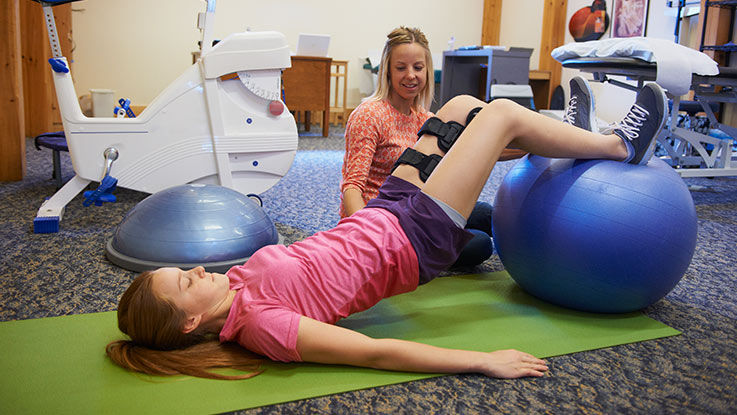
What to expect during a knee physical therapy appointment
During a physical therapy appointment for the knee, one of our specialists will examine your knee, then guide you through exercises that target the muscles and ligaments surrounding the knee.
Our physical therapists will also educate you about your condition, teach you how to modify activities to prevent future knee injuries, help you make lifestyle changes, and show you exercises to do at home to manage your knee condition between appointments.
Depending on your condition, we may use additional physical therapy techniques, including:
Soft tissue mobilization
Soft tissue mobilization is a type of manual treatment where a physical therapist will work with and move the muscles, ligaments and connective tissue around your knee using their hands or tools. This technique can improve tissue flexibility, reduce pain and improve muscle function.
Knee taping techniques
Taping an injured knee can take pressure off the joint and provide the support needed for it to heal. Our physical therapists use advanced, evidence-based taping methods to relieve pain, reduce swelling, improve stability and facilitate proper movement patterns during your recovery.
Blood flow restriction
Also known as BFR or occlusion training,
This means that you’ll do strengthening exercises with light resistance and get the same benefit as if you were working with something much heavier. Blood flow restriction can be a good treatment option for people with weight-bearing restrictions while recovering from an injury or surgery.
Dry needling
Physical therapists will strategically place needles around the knee to relax muscle tension, improve muscle activation and reduce pain. This treatment also encourages the brain to release endorphins, which helps relieve pain. Dry needling is sometimes recommended alongside other physical therapy techniques to help you get the most out of your treatment plan.
Benefits of physical therapy for the knee
Everyone experiences different benefits from physical therapy of the knee. Some of the ways we commonly help patients are:
- Better stability
- Faster and safer recovery
- Improved strength and flexibility
- Management of chronic issues
- Reduced pain and inflammation
- Restored mobility and function
- Return to activity