Many seniors are able to care for themselves and make their own health care decisions. But sometimes they need the support of a friend or loved one.
Being a caregiver isn’t always easy. It takes time and compassion. So while you’re taking care of others, it’s important to care for yourself, too.
With our HealthPartners MSHO plan, your loved one gets the benefits they need. And as the person they rely on, you may have access to caregiver support services, mental health support, respite care and transportation benefits to help you succeed. If you qualify, there’s no cost to you.
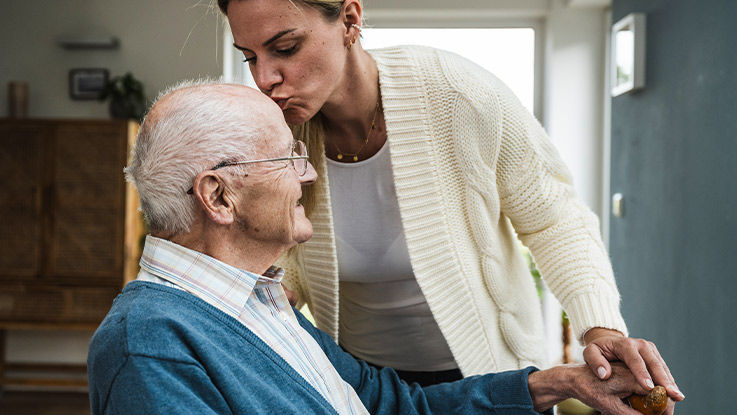
Caregiver support under the HealthPartners MSHO plan is available if you’re caring for an MSHO member with a dementia diagnosis. Some benefits are also available if you’re a caregiver of a member who’s on Elderly Waiver (EW).
The well-being of both you and your loved one is important. And when you take care of yourself, you’re able to provide your loved one with better care.
Below, you can learn more about the caregiver support included at no cost as part of your care recipient’s HealthPartners MSHO plan. We’ve also put together resources to support you while you help your loved one remain happy, healthy and a part of their own community.
We want to make sure that you have the skills and confidence needed to provide the best care possible. You have coverage for up to 12 hours of training and education and up to 12 hours of coaching and counseling per year. Coverage is available if you’re a caregiver supporting a HealthPartners MSHO member with a dementia diagnosis or who’s on Elderly Waiver.
These classes and training courses can help you gain the skills and information needed to be an effective caregiver, navigate the health care system, and more. Your loved one’s care coordinator can help you get started.
Being a caregiver is challenging. Sometimes, you could use a break. Respite care provides relief so you’re able to check off your to-do list, get out of town and more. Our MSHO plan covers short-term respite care if you’re a caregiver for a HealthPartners MSHO member who has a dementia diagnosis or who’s on Elderly Waiver.
Depending on your situation, respite care can be arranged in your loved one’s home or for overnight stays. Your loved one’s care coordinator can help you get started.
When you’re taking care of someone with dementia, it can feel like your mental health has to come after your responsibilities. But it’s important to be mindful of how you’re doing too. That’s why our MSHO plan includes coverage for up to six psychotherapy sessions per year for caregivers of HealthPartners MSHO members who have a dementia diagnosis.
It’s a good opportunity to talk with a care provider about what you’re going through. After all, extra support for you helps your loved one, too. Your loved one’s care coordinator can help you get started.
The HealthPartners MSHO plan covers access to RideCare℠ for caregivers of members with a dementia diagnosis. RideCare offers safe and reliable transportation to certain services. Your loved one can use it for many health-related needs. As a caregiver, you can use it too whenever you need a ride for any covered caregiver support service described above.
If the person you care for is already a HealthPartners MSHO member, contact their care coordinator to get started. They can determine if you qualify for covered caregiver benefits under the plan. If you do, they can help you understand what’s covered.
Regardless of your coverage eligibility, your loved one’s care coordinator can also help you find resources, respite care organizations, caregiving skills classes, support services that provide counseling, coaching, therapy and more.
- Alzheimer's Association – Support, education and resources (including a 24/7 helpline) for seniors with Alzheimer’s and dementia
- Caregiver Action Network – Tips and ideas for caregivers who help loved ones manage a specific health condition
- Caregiver support groups – Online and in-person caregiver support groups of all sizes are available for you to join, including for condition-specific resources
- CareNextion – A free Minnesota-based platform through Senior Community Services that connects you with other caregivers
- Family Caregiver Connection – Comprehensive caregiver support services in Anoka County
- HealthPartners Medicare medication therapy management (MTM) program – One-on-one help from a pharmacist to make sure your loved one’s medications are working the way they should
- Mental health resources – If you don’t already have access to a professional who can help you work through the many different thoughts and feelings caregivers often experience, ask your primary care provider for a referral
- Minnesota Aging and Disability Resources – Information about state-wide programs and assistance services
- Minnesota Aging Pathways – Tips and resources for seniors, including caregiver tips
- Senior Community Services – Family caregiver counseling, support groups and senior services in Carver, Hennepin, Scott, Sherburne and Wright counties
- The Conversation Project – Resources for discussing and documenting advance care planning with your loved one and their care team, so your loved one can be cared for the way you planned together
- Tips for caregivers, directly from caregivers – Advice from real caregivers through Minnesota Aging Pathways
- Tips for caring for aging parents – Ideas from HealthPartners experts for managing health care and health needs, accessing financial assistance, and more
Last updated June 2026
Language assistance and nondiscrimination notice for MSHO (PDF)